Understanding Climate Zone 5A and Your Home's Insulation Needs
Winnebago County sits squarely in Climate Zone 5A, a region defined by cold winters, moderate summers, and significant temperature swings throughout the year. This climate classification means your home faces real challenges: freezing temperatures that can dip well below zero, frost-prone soil conditions, and the constant threat of heat loss during the heating season. For homeowners in Rockford and surrounding areas, understanding what Zone 5A demands from your insulation strategy is the first step toward a comfortable, energy-efficient home.
The key to surviving and thriving in this climate is not just about adding insulation everywhere. It is about strategic placement and air sealing. Many homeowners assume that thicker insulation alone will solve their problems, but the reality is more nuanced. In Climate Zone 5A, air leaks are your enemy. Cold air infiltrating through gaps, cracks, and unsealed cavities will undermine even the best traditional insulation. This is why modern spray foam solutions have become so popular in the region. They seal and insulate simultaneously, addressing both the R-value requirement and the air barrier need that Zone 5A homes demand.
Why Air Sealing Matters More Than You Think
Air sealing is the foundation of energy efficiency in any climate, but it becomes critical in a place like Winnebago County where heating costs can consume a significant portion of your annual utility budget. When air leaks exist around your home's envelope, conditioned air escapes and unconditioned air enters. In winter, this means your heating system works overtime, burning fuel and money to maintain comfort. Studies show that air leakage accounts for roughly 30 percent of a home's heating and cooling loss, a figure that can be even higher in older homes or those with poor original construction practices.
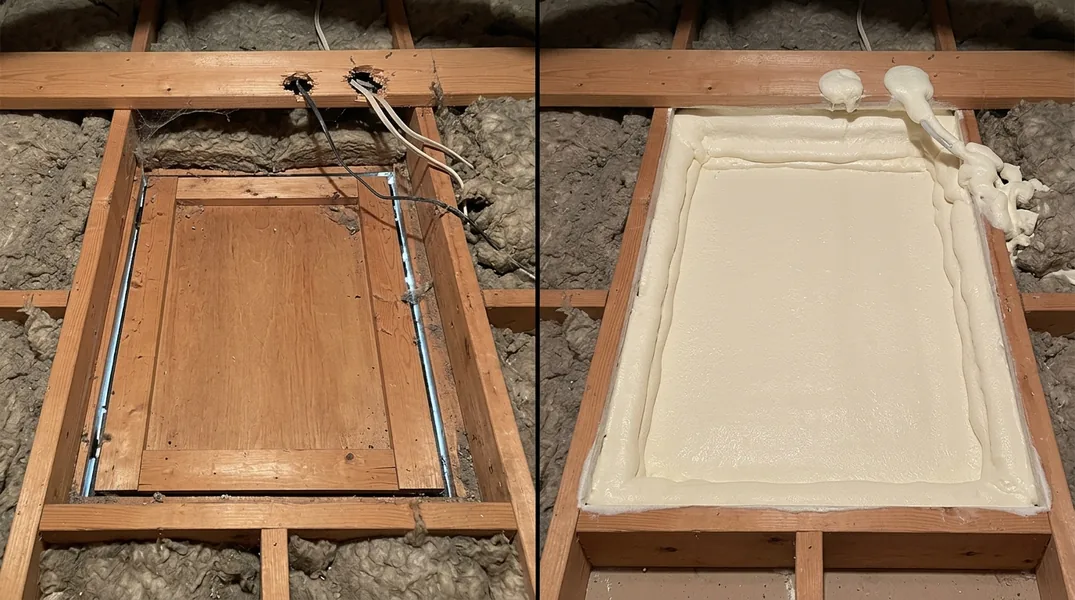
The challenge with traditional insulation methods is that they do not address air movement effectively. Fiberglass batts, blown cellulose, and mineral wool all have excellent R-values, but they allow air to pass through them. Closed Cell Spray Foam Insulation changes this equation entirely. When applied to crawl spaces, attics, or wall cavities, closed cell foam expands to fill every nook and creates an air-tight seal while simultaneously providing insulation. For homeowners in Loves Park and throughout the county, this dual benefit translates directly into lower heating bills and more consistent indoor temperatures.
Crawl Space Insulation and Cold Floors: The Hidden Energy Drain
One of the most overlooked sources of discomfort and energy loss in Zone 5A homes is the crawl space. Many homeowners do not realize that cold floors, drafty rooms, and unexplained heating inefficiencies often originate from an uninsulated or poorly insulated crawl space. In a region where ground temperatures can remain near freezing for months, an exposed crawl space becomes a thermal bridge, pulling heat directly from your living spaces above. If you have ever walked across a room and felt a sudden chill underfoot, you have likely experienced the effects of inadequate crawl space insulation.
The best insulation for crawl space applications combines effective thermal resistance with moisture control and durability. Pier and beam homes, which are common in parts of Winnebago County, are particularly vulnerable to crawl space heat loss because the floor system is exposed to outdoor air and ground conditions. Crawl space spray foam addresses this issue comprehensively. It insulates the band joists (the rim joists at the perimeter), the floor joists themselves, and creates a vapor barrier that prevents moisture intrusion from the ground. This is especially important in a climate with long, cold winters and persistent ground moisture.
For pier and beam homes, pier and beam insulation using spray foam is often the most effective solution available. The foam adheres directly to the wood structure, fills gaps around pipes and wiring, and maintains its insulating properties year after year without settling or degrading. Homeowners who invest in this upgrade often report warmer floors, quieter homes (less air noise), and measurable reductions in heating costs.
How Spray Foam Outperforms Traditional Insulation in Zone 5A
When comparing insulation options for a Climate Zone 5A home, the performance difference between spray foam and traditional materials becomes clear. Fiberglass batts offer an R-value of roughly 3.2 to 3.8 per inch, while blown cellulose provides around 3.5 per inch. Closed Cell Spray Foam Insulation, by contrast, delivers R-values between 6 and 7 per inch. This means you need significantly less material to achieve the same thermal resistance, which is particularly valuable in tight spaces like crawl spaces or wall cavities where space is limited.
Beyond raw R-value, spray foam's air-sealing capability is unmatched. When a technician applies closed cell foam, it expands to fill every cavity, gap, and void. This eliminates the thermal bridging that occurs with traditional batts, which only fill the space between studs or joists and leave gaps around pipes, wiring, and irregular shapes. In a Zone 5A climate where air infiltration is a primary energy loss mechanism, this difference is substantial. Homeowners in Cherry Valley and throughout the region have found that spray foam retrofits deliver faster payback periods than traditional insulation upgrades, often recouping their investment through energy savings within five to ten years.
Open Cell Spray Foam Insulation is another option worth considering for certain applications. While it has a lower R-value per inch (around 3.6), it is less expensive and still provides excellent air sealing. Open cell foam is also more vapor-permeable, making it suitable for interior wall applications where moisture management is important. The choice between closed cell and open cell depends on your specific application, budget, and moisture profile.
Spray Foam Insulation Near Me: When to Call a Professional
If you are a homeowner in Winnebago County experiencing cold floors, high heating bills, or uncomfortable temperature variations, now is the time to consider a professional evaluation. Spray foam insulation is not a DIY project. The application requires specialized equipment, training, and an understanding of building science that only experienced contractors possess. Improper application can result in incomplete coverage, overspray, or inadequate air sealing, undermining the entire purpose of the upgrade.
Rockford Spray Foam Insulation serves the local area with expertise in both residential and commercial applications. Whether you need Attic Spray Foam Insulation, crawl space solutions, or Wall & Injection Foam Insulation, a qualified local contractor can assess your home's specific needs and recommend the best approach. The team understands Zone 5A's demands and can help you prioritize improvements based on where your home is losing the most energy. To discuss your situation and learn about available options, contact Rockford Spray Foam Insulation at (815) 706-6507 or request a free estimate online.
Spray Foam Insulation Cost in Rockford: What to Budget
Cost is a legitimate consideration for any home improvement project. Spray foam insulation generally costs more per square foot than traditional materials, typically ranging from $1.50 to $3.50 per board foot depending on the type (closed cell or open cell), application area, and local market conditions. A crawl space project might range from $2,000 to $8,000 depending on size, while attic applications can vary widely based on square footage and complexity. These figures are higher than fiberglass or cellulose, but they do not tell the whole story.
When evaluating pricing, consider the long-term return on investment. Spray foam's superior air-sealing properties mean faster energy savings. Many homeowners see noticeable reductions in heating costs within the first heating season after installation. Additionally, spray foam is durable and does not settle, degrade, or lose effectiveness over time the way some traditional materials do. This means the insulation you install today will perform at full capacity for decades. For a detailed quote tailored to your home's specific needs, reach out to Rockford Spray Foam Insulation and discuss your budget and priorities.
Looking for a professional spray foam insulation contractor in Rockford? Rockford Spray Foam Insulation responds fast for all your spray foam insulation needs.
Get a Free Quote