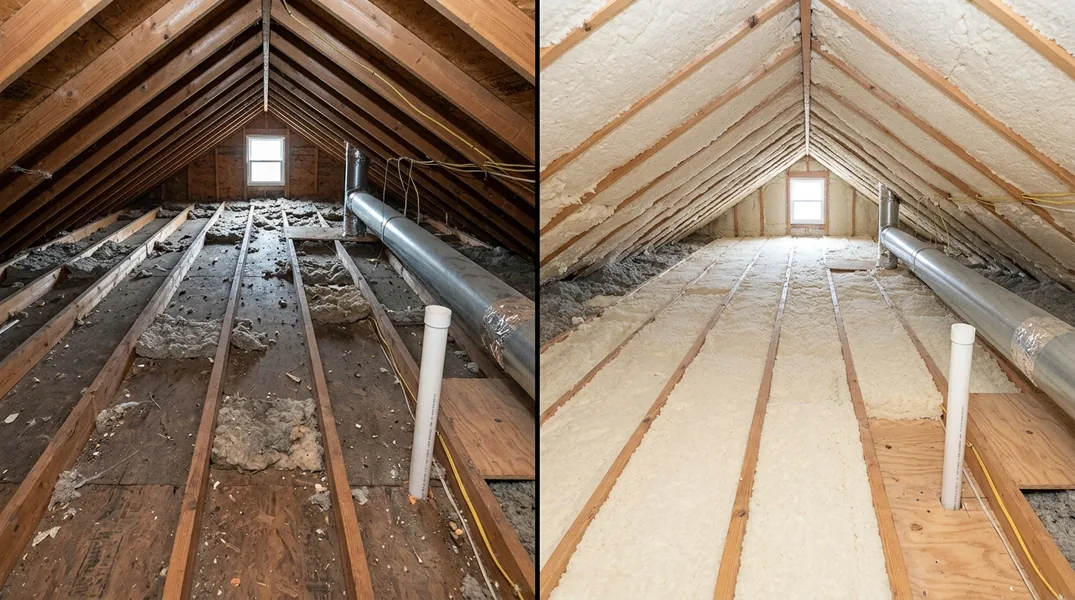
Why Rockford's Historic Homes Need Modern Insulation Solutions
The charm of early-1900s homes throughout Rockford, particularly those nestled near the scenic Rock River, comes with a significant drawback: outdated insulation. These architectural treasures were built with materials and methods that simply don't meet today's energy efficiency standards. Many feature fiberglass batts, mineral wool, or worse, no insulation at all in critical areas like attics and walls.
Homeowners in these older neighborhoods often face skyrocketing heating and cooling bills, drafty rooms, and moisture problems that can lead to structural damage. The Rock River's humid climate and Rockford's temperature swings between seasons create an especially challenging environment for aging insulation systems. Modern solutions like Attic Spray Foam Insulation offer a way to preserve the character of these historic homes while dramatically improving their performance and comfort.
Is Spray Foam Insulation Worth It for Your Rockford Home?
When evaluating whether spray foam is worth the investment, homeowners need to look beyond the initial sticker price. The real question is: what value does it deliver over time? For Rockford residents, particularly those in early-1900s homes, the answer is often a resounding yes. Spray foam insulation delivers an impressive air seal that traditional insulation simply cannot match. It fills gaps, cracks, and irregular spaces that fiberglass misses, creating a continuous thermal barrier that reduces energy loss by 30 to 50 percent in many cases.
The long-term savings on utility bills typically offset the higher upfront cost within 5 to 8 years. Beyond energy savings, spray foam adds structural integrity to walls, reduces noise transmission, and prevents moisture infiltration. For historic homes near the Rock River where humidity and temperature fluctuations are constant concerns, these benefits become even more valuable. When you factor in improved comfort, fewer HVAC repairs, and enhanced home value, Attic Spray Foam Insulation becomes a smart long-term investment rather than just an expense.
Is Spray Foam Insulation Safe? Understanding Off-Gassing and Installation
Safety concerns about spray foam insulation are legitimate, but they're largely tied to installation quality and product type. The primary concern homeowners raise involves spray foam off-gassing, which occurs when isocyanates and polyols release volatile organic compounds (VOCs) during and immediately after application. However, when installed by trained professionals following EPA and manufacturer guidelines, off-gassing poses minimal risk to occupants. Most off-gassing occurs during the application process, and proper ventilation during installation is essential to protect both the installation crew and the home.
The distinction between Closed Cell Spray Foam Insulation and Open Cell Spray Foam Insulation matters for safety considerations. Closed cell foam is denser and creates a more complete moisture barrier, making it ideal for older homes where water intrusion is a concern. Open cell foam is less dense, allows some moisture vapor transmission, and typically has lower VOC emissions post-installation. Both types, when applied by certified professionals, are considered safe for residential use. The key is hiring experienced installers who understand proper application techniques, ventilation requirements, and how to manage the curing process. If you're concerned about off-gassing in your Rockford home, discuss these options with your contractor before work begins.
Spray Foam Insulation Problems and Pros and Cons
Like any building material, spray foam insulation has legitimate advantages and disadvantages worth understanding. On the positive side, spray foam delivers superior air sealing, exceptional R-value per inch, long-term durability, and can actually strengthen walls by providing structural support. It's particularly effective at preventing air leaks around pipes, electrical penetrations, and other common problem areas in older homes. The moisture resistance of closed cell foam makes it especially valuable for historic properties where water damage is a persistent threat.
The cons are equally important to consider. Spray foam insulation problems include higher upfront costs compared to traditional insulation, potential for improper installation if not done by certified professionals, and difficulty in future renovations (foam must be cut away to access walls). Some homeowners report concerns about spray foam off-gassing if installation wasn't performed correctly, though this is largely preventable with proper technique. Additionally, if the foam isn't installed with the correct density or thickness, it may not perform as intended. For homes with existing wall cavities, Wall & Injection Foam Insulation offers a less invasive alternative that addresses some of these concerns, though it requires professional assessment to determine feasibility.
The key to avoiding spray foam insulation problems is working with established, certified contractors who understand local building codes and climate conditions. In Rockford, where homes face specific challenges from seasonal temperature changes and humidity near the Rock River, professional installation becomes even more critical.
Attic Spray Foam Insulation Cost in Rockford: What to Budget
Understanding the cost structure of spray foam insulation helps homeowners make informed decisions. Attic Spray Foam Insulation typically ranges from 1.50 to 3.50 dollars per board foot installed, depending on foam type, attic size, and accessibility. A typical 1,000 square foot attic might cost between 1,500 and 3,500 dollars, though prices vary based on whether you choose open cell or closed cell foam and the R-value required. For historic homes in Rockford, attics often have irregular dimensions, multiple penetrations, and structural quirks that can affect final pricing.
Rather than focusing solely on price, consider value. Many homeowners find that energy rebates, tax credits, and long-term utility savings make spray foam more affordable than the initial quote suggests. Some utility companies offer incentives for upgrading insulation in older homes. To understand the specific pricing for your property and what rebates might apply, contact Rockford Spray Foam Insulation at (815) 706-6507 or request a free estimate. A professional assessment of your attic will reveal exactly what you need and what realistic costs look like for your home.
Getting Started: Spray Foam Insulation Near Me in Rockford
If you own an early-1900s home in Rockford or the surrounding areas and are ready to upgrade your insulation, the first step is a professional assessment. A qualified contractor will evaluate your current insulation, identify air leaks, assess moisture issues, and recommend the best solution for your specific situation. This might be Attic Spray Foam Insulation, closed cell or open cell options, or injection foam for existing walls.
Rockford Spray Foam Insulation specializes in helping homeowners in historic neighborhoods make the right choices for their properties. We understand the unique challenges of older homes near the Rock River and have the expertise to deliver solutions that respect your home's character while dramatically improving its performance. Whether you have questions about safety, off-gassing, cost, or whether spray foam is right for you, our team is ready to help. Call us today at (815) 706-6507 or visit our website to request a free estimate and take the first step toward a more comfortable, efficient home.
Looking for a professional spray foam insulation contractor in Rockford? Rockford Spray Foam Insulation responds fast for all your spray foam insulation needs.
Get a Free Quote